
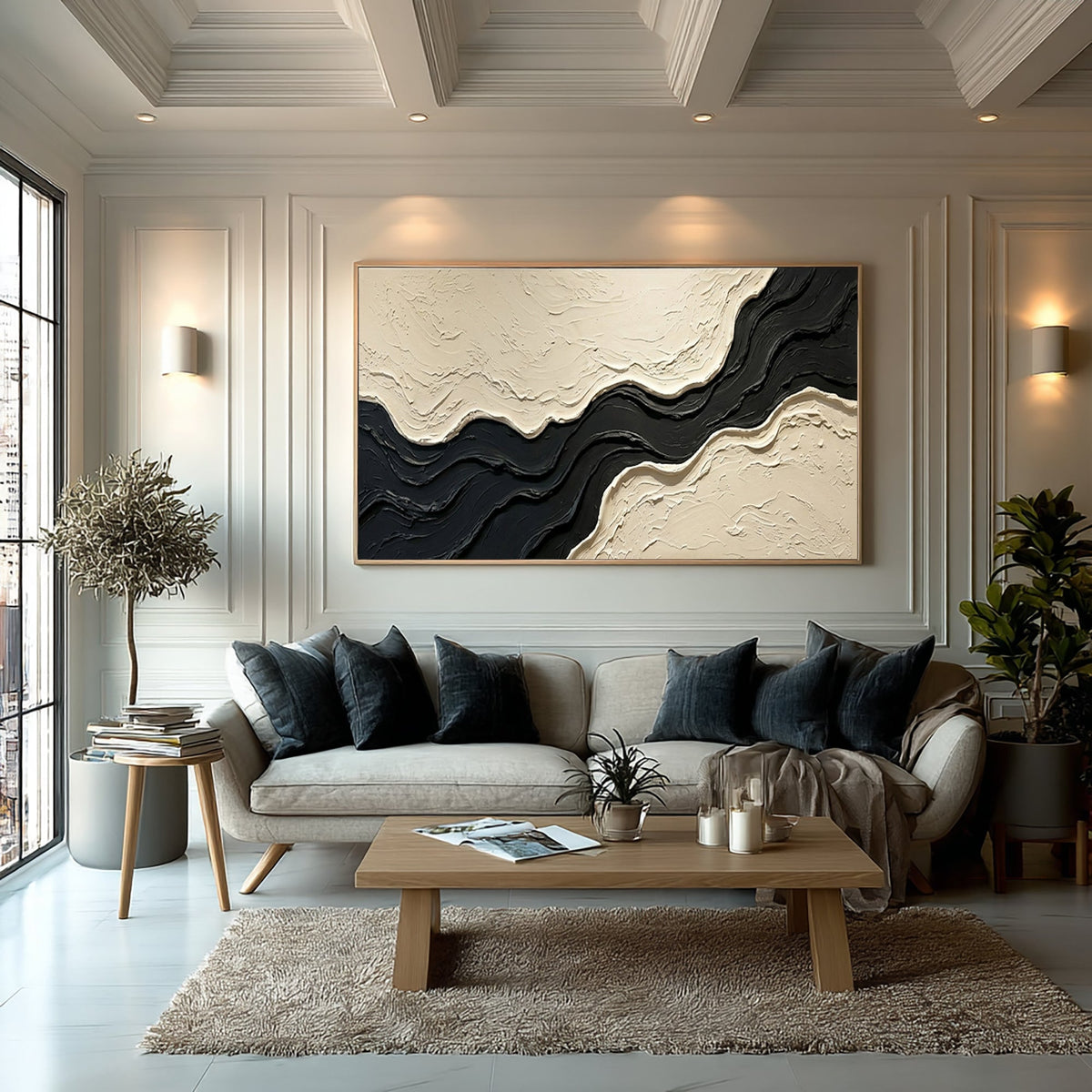
Have you ever stood in front of an empty beige wall in your living room, knowing the space feels unfinished, yet hesitating to bring in dark tones out of fear they might make the room feel heavy or gloomy? The secret interior designers use to add depth without sacrificing warmth is black textured wall art. Unlike flat, mass-produced posters that absorb light and look lifeless against drywall, hand-crafted textured wall art uses raised ridges, sweeping palette knife strokes, and sculptural contours to catch and reflect ambient light throughout the day. Instead of closing a room in, the right piece creates an immediate focal point that grounds your furniture and elevates your home's architecture. Ready to see how tactile dark tones can transform your blank walls into a gallery-worthy sanctuary?
Why Choose Black Textured Wall Art?
Every well-designed room needs a visual anchor—an intentional point of contrast that keeps light-colored walls, soft bouclé sofas, and pale wood floors from blending into a washed-out sea of neutrals. When you introduce dark tones through sculptural, three-dimensional brushwork rather than a flat print, you get all the sophistication of charcoal and obsidian without the starkness. Because a hand-painted surface is built up layer by layer with thick oil and mineral mediums, the canvas acts like a miniature landscape of peaks and valleys.
Throughout the day, this tactile relief interacts dynamically with your home's lighting. Morning sunlight streaming through sheer curtains grazes across the raised edges, casting soft micro-shadows that make the painting feel alive. In the evening, warm overhead spotlights or wall sconces catch the subtle sheen of oil paint and mineral grains, softening the dark pigment into rich shades of slate, espresso, and deep graphite. For homeowners tired of cheap, glossy machine prints that glare under indoor bulbs, investing in 100% hand-painted artwork by professional artists offers an irreplaceable sense of soul and craftsmanship.

Popular Styles of Black Textured Wall Art
Dark, tactile artwork is far from one-note. Depending on the movement of the ridges and the secondary tones woven into the composition, black textured wall art adapts effortlessly to quiet minimalist spaces, industrial lofts, or contemporary homes.
Organic Wabi-Sabi and Modern Abstract Expressions
Rooted in the philosophy of finding beauty in natural imperfection, Wabi-sabi pieces celebrate raw plaster textures, weathered grooves, and asymmetrical balance that resemble stone formations or rippled sand. Alongside Wabi-sabi, black abstract wall art remains a favorite for modern interiors because it relies on fluid gesture and compositional proportions rather than literal subjects. A sweeping piece of black abstract wall art uses bold geometric reliefs, intersecting arcs, or spontaneous impasto sweeps to bring kinetic energy to calm, uncluttered rooms.
Timeless Contrast with Black and White Textured Wall Art
If you love a crisp, architectural aesthetic but want to avoid a cold or sterile atmosphere, black and white textured wall art strikes the ideal balance. By pairing deep carbon recesses with creamy ivory or chalk-white peaks, these paintings soften the transition between a dark focal point and light plaster walls. Whether hung as a single statement canvas or a balanced diptych, black and white textured wall art bridges matte black window frames and iron coffee tables with cream upholstery and pale oak flooring.
Warm Luxury with Black and Gold Textured Wall Art
For spaces that call for warmth and understated glamour, black and gold textured wall art delivers effortless sophistication. Artists apply metallic gold leaf, bronze accents, or champagne foil along the crests of dark impasto ridges, allowing the gilded details to glimmer against the matte background. Hanging black and gold textured wall art in a dining room or formal living area instantly elevates brass light fixtures, walnut cabinetry, and velvet seating.
Exploring Textures, Materials, and Canvas Styles
Understanding how tactile artwork is constructed helps you select a piece that looks and feels authentic up close. High-end textured wall art goes far beyond standard brushstrokes; skilled artists combine heavy-body oil paints with natural quartz sand, modeling paste, and mineral plaster using palette knives and notched trowels. This impasto technique creates dramatic 3D contours that rise several millimeters off the surface.
The foundation matters just as much as the surface medium. Authentic textured canvas art requires heavy-weight cotton or archival linen stretched taut over kiln-dried solid wood stretcher bars. Because thick layers of oil paint and mineral aggregate add physical weight, a sturdy frame prevents warping over time. At Muro Art, our artists craft both single oversized canvases and multi-panel sets—such as sets of two or three—that allow a continuous textural motif to flow across wide architectural expanses. When you invest in genuine textured canvas art, you bring home a durable, gallery-grade heirloom.
| Feature | 100% Hand-Painted Impasto Oil Painting (Muro Art) | Mass-Produced Machine Print / Poster |
| Surface Depth | True 3D sculptural ridges crafted with palette knives and quartz sand | Flat paper or synthetic surface with zero physical relief |
| Light Interaction | Casts dynamic micro-shadows that shift with daylight and warm lamps | Creates artificial surface glare under windows and indoor bulbs |
| Artistic Value | One-of-a-kind brushwork painted by a professional artist | Identical factory duplicates printed by the thousands |
| Longevity | Archival oil and mineral mediums on heavy linen over solid wood | Fades in sunlight and warps easily in humid environments |
How to Style Black Textured Wall Art in Different Rooms
Integrating dark artwork into your home does not require a dark color palette. Thoughtfully placed black wall decor looks most striking against warm off-white, greige, sage green, or soft taupe walls. Use these room-by-room styling ideas to harmonize your artwork with your existing furnishings:
-
The Living Room: Anchor your primary seating area by hanging statement living room wall art directly above the sofa or fireplace mantel. Pair the painting's deep charcoal ridges with tactile fabrics like a cream bouclé couch, a chunky wool rug, and travertine side tables so the room feels layered and inviting.
-
The Bedroom: Choose calming, horizontal wave or minimalist Wabi-sabi textures to hang above the headboard. Soft, sweeping grooves in matte charcoal promote tranquility when paired with oatmeal linen bedding and diffused bedside lamps.
-
The Entryway and Dining Area: Make a memorable first impression in a foyer or anchor a wooden dining table with vertical black wall decor. Adding an angled ceiling spotlight or picture light above the frame highlights the 3D brushwork during evening gatherings.
-
The Home Office: Position a structured geometric relief behind your desk to eliminate visual clutter on video calls while bringing grounded, creative focus to your workspace.

How to Choose the Right Black Textured Wall Art
Selecting the ideal painting comes down to balancing scale, compositional proportions, and lighting. Before choosing your black textured wall art, walk through these five practical steps to guarantee a seamless fit:
-
Follow the Two-Thirds Sizing Rule: When hanging artwork above a sofa, console, or bed, the total width of the canvas should span two-thirds to three-quarters of the furniture's width below it. For a standard 84-inch sofa, look for large black wall art measuring 55 to 64 inches wide so the piece commands the space without overwhelming it.
-
Choose Between a Single Canvas and Multi-Panel Sets: For an expansive blank wall in an open-concept space, large hand-painted oil paintings—or a coordinated diptych or triptych (sets of 2 or 3) hung with a 2-inch gap between panels—distribute visual weight evenly across wide walls.
-
Hang at True Gallery Eye Level: Position the center of your textured wall art at 57 to 60 inches from the floor, or leave 6 to 8 inches of breathing room above the top of your sofa back.
-
Match Undertones to Your Room's Temperature: Pair warm rooms (oak floors, beige walls, brass hardware) with large black wall art featuring hints of espresso, sand, or gold, and cool rooms (gray tile, crisp white walls, chrome accents) with pure charcoal or stark white accents.
-
Practice Gentle Maintenance: Keep your painting away from direct heat vents, and lightly dust the raised ridges monthly using a soft, dry microfiber brush—never wet wipes—to preserve the contours.
Conclusion
Bringing depth, character, and gallery-level sophistication into your home does not require a full renovation—sometimes all it takes is the right piece of black textured wall art to bring your room into focus. At Muro Art, every canvas is 100% hand-painted by professional artists using rich, sculptural textures designed to elevate modern, Wabi-sabi, and minimalist interiors alike. With versatile sizes, multi-panel sets, and free global shipping right to your door, upgrading your walls has never been simpler. Browse the Muro Art collection today to find the one-of-a-kind hand-painted oil painting that completes your home.
Frequently Asked Questions About Black Textured Wall Art
Does black wall art make a room look smaller?
No—when styled with proper proportions, dark artwork adds visual depth that makes a room feel more expansive. Because hand-painted 3D ridges catch and bounce light across the surface, they prevent the heavy, closed-in feeling associated with flat dark paint, especially against light neutral walls.
What colors go well with black textured wall art?
Warm neutrals like creamy off-white, oatmeal, greige, and camel create an inviting, high-contrast backdrop. Earthy tones such as terracotta, olive green, and warm walnut wood also pair effortlessly with dark tactile canvases, softening the bold pigment into a cozy, organic palette.
How do you clean textured canvas art?
Use a clean, dry, soft-bristled paintbrush or a gentle feather duster to sweep away dust along the direction of the raised ridges. Avoid using water, damp cloths, or chemical sprays on textured canvas art, as moisture can trap dust in the crevices or damage the oil medium.
Should I choose a single oversized canvas or a multi-panel set?
Choose a single oversized canvas when you want a calm, uninterrupted focal point above a fireplace or bed. Opt for a multi-panel set of 2 or 3 canvases for wide living room walls or long hallways, as the spacing between panels stretches the horizontal footprint naturally.
How does lighting affect hand-painted textured abstract art?
Directional lighting is what brings textured abstract art to life. Side window light or an angled warm LED spotlight casts subtle shadows across the palette knife peaks and valleys, causing the artwork's mood and contrast to shift organically from morning to night.


Leave a comment
All comments are moderated before being published.
This site is protected by hCaptcha and the hCaptcha Privacy Policy and Terms of Service apply.